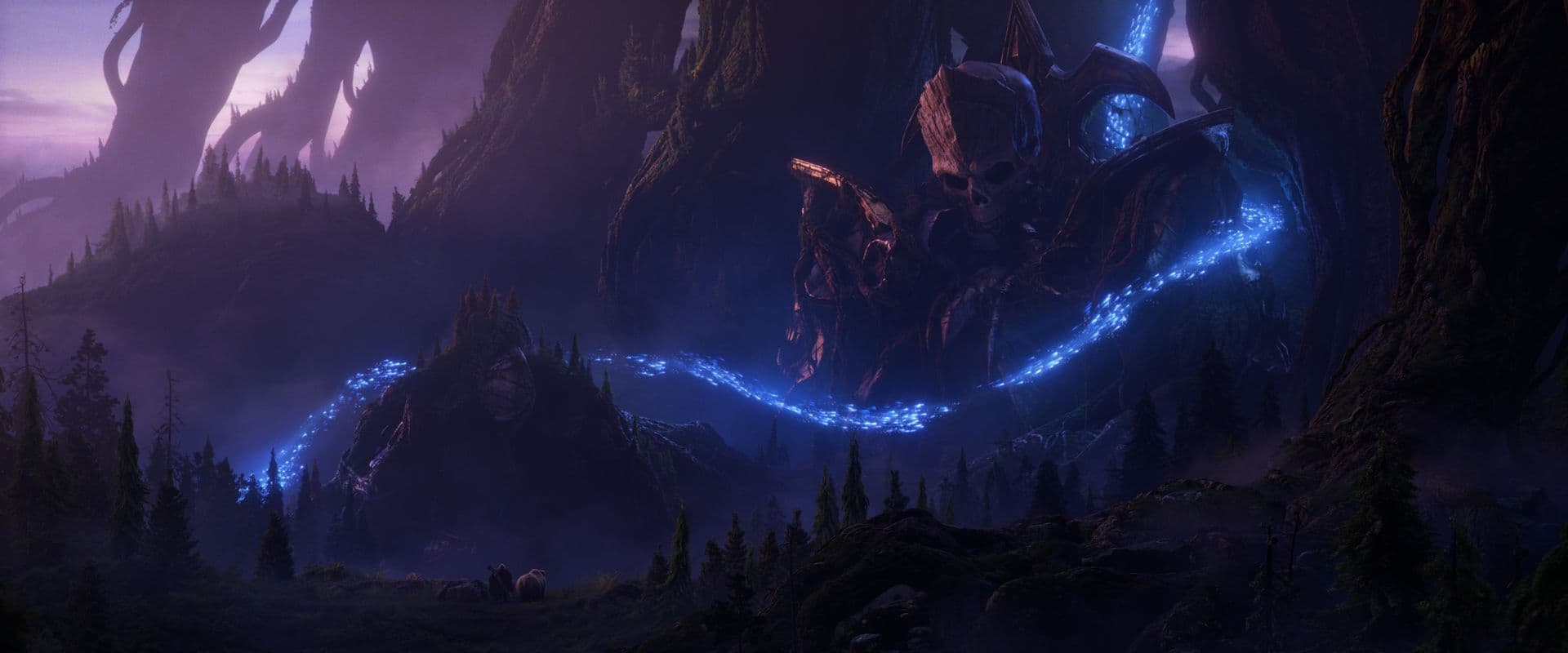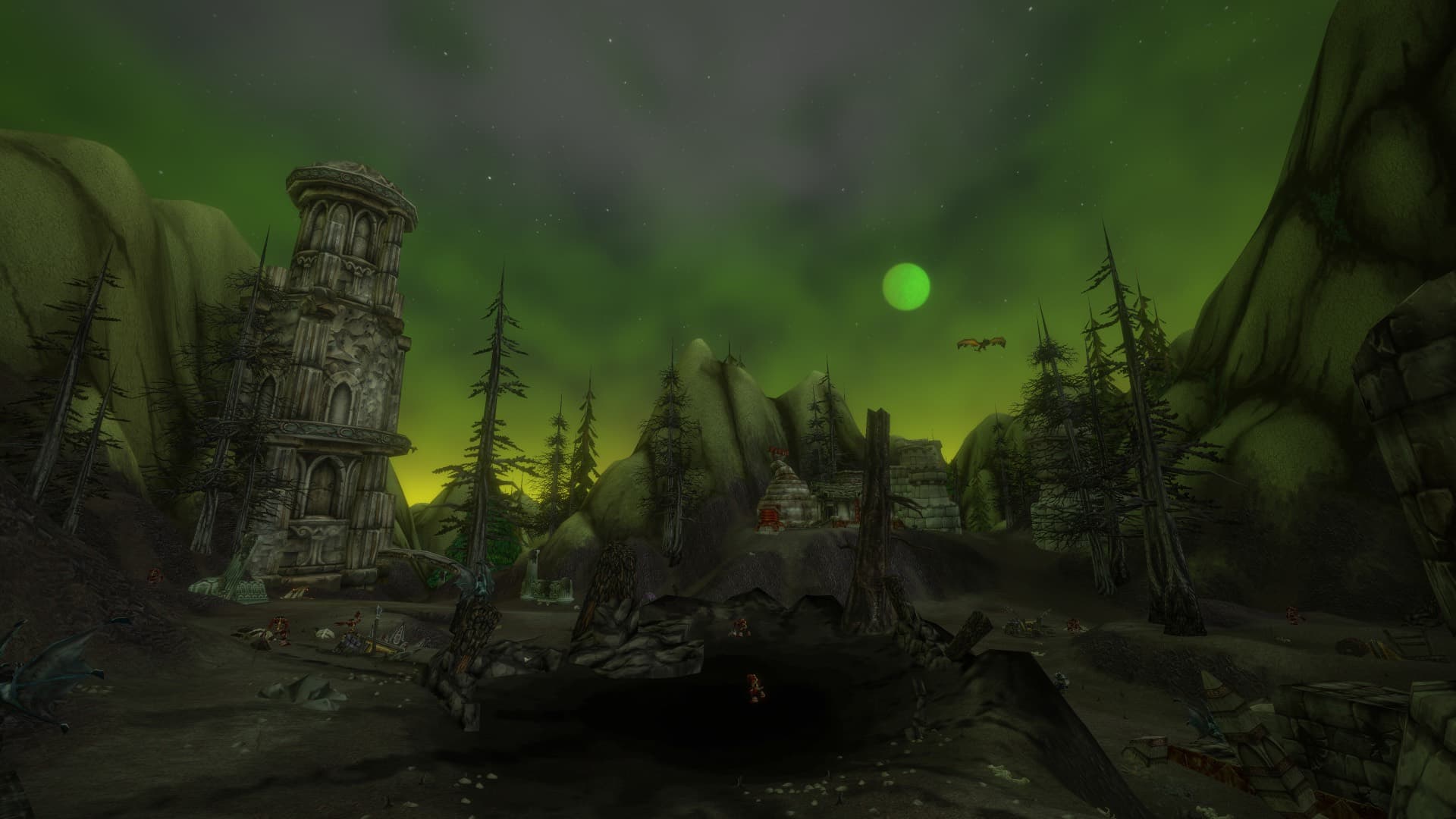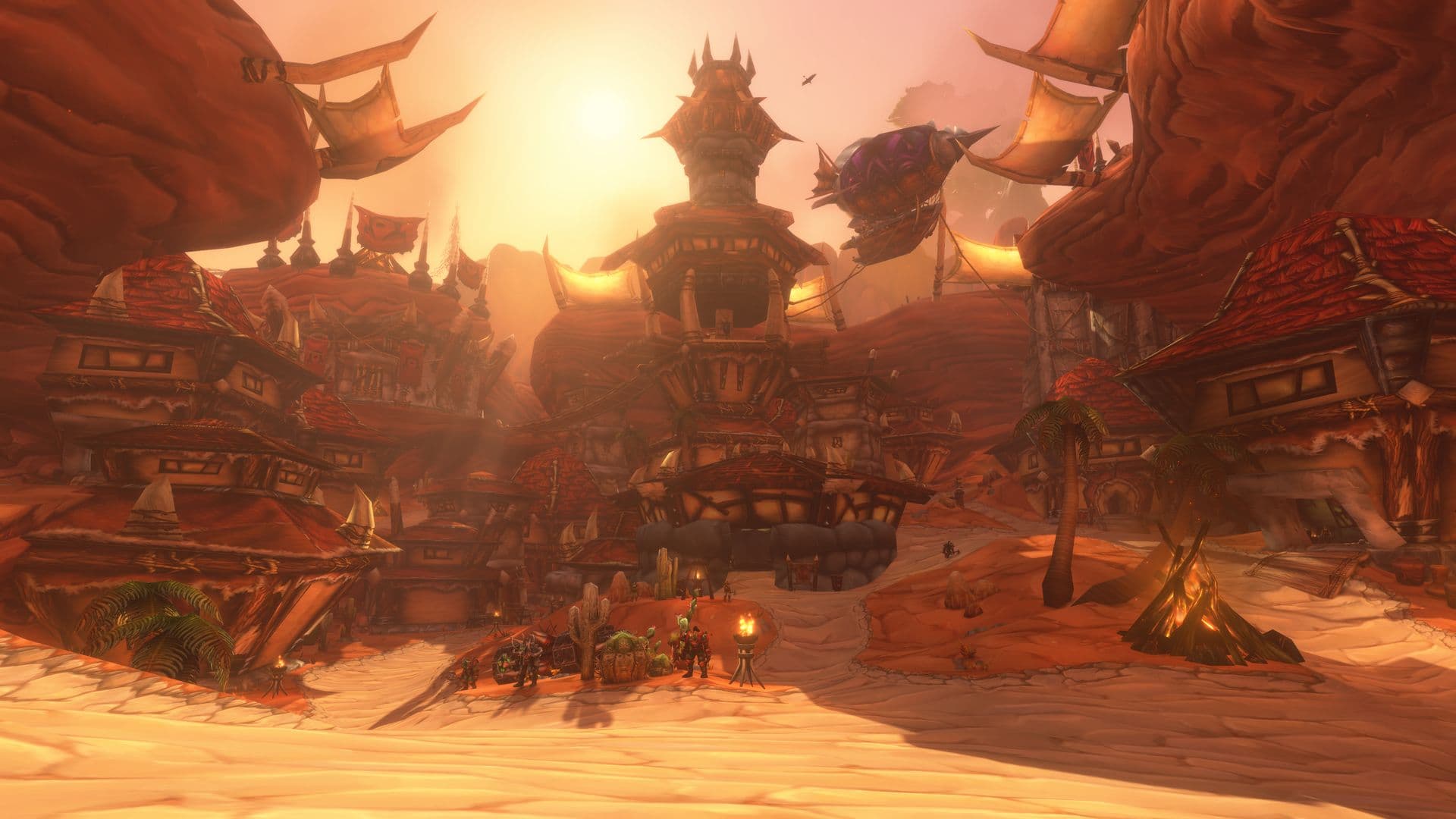
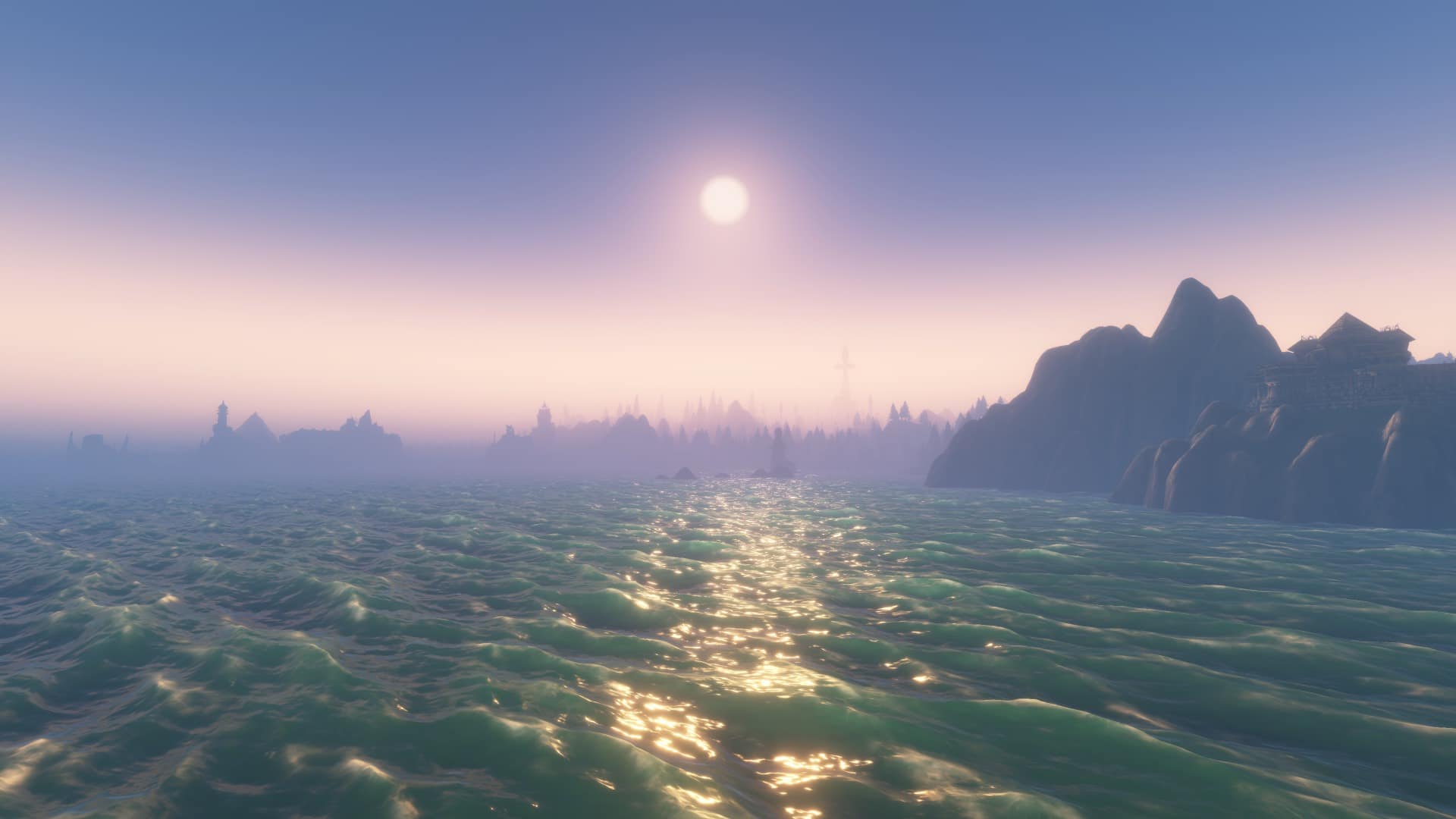
WoW Forever is Classic with a new visual layer, and that comes at a price: it asks for more than Classic, and at launch it drops cards that run the game today. This guide covers what you need, what each setting actually does and, above all, which ones to touch first depending on your machine.
One warning up front, because it changes how you should read everything below: nobody has published a proper performance test of Forever yet. Not a hardware outlet, not Blizzard. What exists is players posting their numbers on the official forums during the beta. We keep the three apart here: what Blizzard says, what the game client says and what one player with one machine reports.
What are the system requirements for WoW Forever?
Blizzard has not published a requirements sheet for Forever on the game site or in support. The Forever page has the module ready — with its "Minimum requirements" and "Recommended requirements" labels — and not a single value inside it.
Two things are official and checkable:
- The client requires Windows 10 or later. Anyone installing on anything older gets error
BLZBNTAGT000009CF, which says the operating system does not meet the minimum specs. There are players with that error on the official forums and Blizzard has replied in the thread. Note that the public WoW requirements sheet still says Windows 7 SP1: that sheet is for the modern game, not for Forever. - The graphics card notice, which has its own official article and is covered below.
Requirement tables for Forever do circulate, attributed to the Battle.net shop (8 GB of RAM and a GTX 10 or RDNA 1 as minimum; 16 GB and an RTX 40 or RX 7000 as recommended). We could not verify them on a Blizzard page, because the shop listing requires signing in. We mention them for what they are worth and will mark them confirmed the day Blizzard publishes its own.
Which graphics cards are being dropped?
This part is official and dated: from launch, on November 4, Forever requires a card from these architectures or newer.
| Vendor | Minimum architecture | Example that works | Example that no longer does |
|---|---|---|---|
| AMD | Graphics Core Next 1 (2012) | Radeon HD 7850 | Radeon HD 6950 |
| NVIDIA | Maxwell (2014) | GeForce GTX 9xx, 750 and 750 Ti | GeForce GTX 760, 770, 780 and 8xxM |
| Intel | Skylake (2015) | HD Graphics 530 | HD Graphics 6000 |
Blizzard's stated reason is technical: the new visuals need a specific card feature (RGBA16F UAV in compute shaders) that started shipping around 2012. Blizzard adds that the dropped cards were already well below the game's minimum specs anyway.
We covered it in more detail, alongside everything else that came out as the beta opened, in the interviews article.
Classic or Enhanced: the first choice isn't a graphics one
When you create a character, Forever asks which experience you want. The two options are Classic and Enhanced, and they are not quality presets: they touch art and interface at the same time.
| Classic | Enhanced | |
|---|---|---|
| Character models | Standard Definition | High Definition |
| Quest markers on the map | Off | On |
| One-bag | Off | On |
| Transmog | Off | On |
| Interface | Classic screen layout | Centralized layout |
The game itself says these can be changed later, one by one. It is a starting point, not a locked door.
High Definition or Standard Definition: what really changes
The toggle is called Character Models and has two values, High Definition and Standard Definition. The in-game text makes two things clear that are often reported wrong:
- It applies to your account, not to one character.
- You can change it in the Options menu or at the barbershop.
And a third, the most important one: it only affects character models. The new lighting, the fog, the water and the terrain shadows are independent of it. In other words, picking Standard Definition does not give you the 2004 look — it gives you old-looking characters inside a world with new lighting.
Two caveats worth knowing before you choose:
- The "SD" models are not the original Classic models. It is the most repeated complaint on the official forums: they are the modern models with modern animations, at lower quality. If you expected WoW as it looked in 2004, this is not it.
- The Skyborne only exist in High Definition. The new race has no Standard Definition version and there is no confirmation that it will get one. Choosing SD does not give you a fully SD world.
What about performance? The only player who tested it deliberately, on a GTX 1050 Ti laptop, says switching between High and Standard did not move his frame rate. That is one testimony, not a controlled measurement: do not count on this toggle to rescue your frames.
The five settings that actually matter
Here is the counter-intuitive part of Forever: the distance settings barely do anything. In the WoW you know, dropping view distance was the first trick. In Forever, two players with very different machines agree that taking View Distance, Environment Detail and Ground Clutter from 10 down to 1 buys you about ten frames and little else.
What costs is the new lighting. In order of expense:
- Secondary Lighting. This is Forever's new option and the most expensive of all. In the menu it controls "the detail level of secondary lighting effects". A player with a GTX 1080 at 1440p went from a card pegged at 100% to 60-75% just by lowering it. If you are struggling, this is the first one you touch.
- Compute Effects. This is where volumetric fog lives, and the game itself warns that these effects "may be more expensive for older graphics cards".
- Shadow Quality.
- Ambient occlusion (SSAO). The GTX 1080 player had to switch it off entirely.
- Render Scale. The emergency lever: it draws the game at a lower resolution and scales it back up. On a GTX 1050 Ti laptop, dropping it to 50% took the game from 6-12 frames to 15-25.
When you lower render scale, also check Resample Quality: it is the method used to scale the image back up, and one of its options is FidelityFX Super Resolution 1.0, which looks considerably better than plain resampling.
What to change, depending on your machine
None of these recommendations come from a benchmark suite, because none exists. They come from what each setting does according to the game and from what players with those machines report. Treat them as a starting point.
A laptop, integrated graphics, or a card from before 2016
You are at the edge of what the game supports. The goal is not to look good, it is to be playable.
- Render Scale at 60-70%, with Resample Quality set to FidelityFX Super Resolution 1.0.
- Secondary Lighting off or at minimum.
- Compute Effects off. That means no fog, which is exactly the most expensive part.
- Shadow Quality and ambient occlusion at minimum.
- Character Models: choose on taste, not on frames.
- If the game crashes on entering the world, see the workaround below.
Mid range (GTX 1060 to RTX 3060, RX 580 to RX 6600)
You can look good here if you choose where to spend.
- Set Graphics Quality to a medium-high preset and then lower only Secondary Lighting a couple of steps. It is the best looks-per-frame trade in the game.
- Compute Effects at medium: you keep the fog, which is a big part of the new look, without paying for all of it.
- Leave view distance and environment detail alone: cutting them makes the game uglier and gives little back.
- Render Scale at 100%. If you run short in cities, lower lighting and shadows before touching it.
High end (RTX 4070 and up, RX 7800 XT and up)
You can run everything, with two caveats.
- Even here, 25-30 frames in a crowded zone has not been unusual during the beta. That is the client, not your machine.
- Ray Traced Shadows: the option exists in the client, but during the beta many players say it does not appear or will not enable, even on current cards. According to a German hardware outlet, Blizzard built its own ray tracer for global illumination instead of using the system standard, which would explain why the new look also runs on old cards.
- If you have power to spare, Render Scale above 100% cleans up aliasing better than any anti-aliasing option.
Can you turn the fog off in WoW Forever?
Yes, with a chat command:
/console volumeFog 0A 1 turns it back on. There is no fog checkbox in the menu: the closest thing is lowering Compute Effects, which controls it alongside other effects.
Most people turn it off for frames, but there is a second reason on the official forums: the fog sits very close to the character and causes eye strain. If your eyes feel odd after a session, try turning it off before you lower everything else.
Does WoW Forever have DLSS?
No. We checked the beta client: there is not a single mention of DLSS, DLAA or XeSS. What it does have is:
- FidelityFX Super Resolution 1.0, and only as the upscaling method when you lower render scale. It is not FSR 2, 3 or 4.
- NVIDIA Reflex and Intel XeLL under Low Latency Mode. They reduce latency, they do not upscale: they will not give you frames.
About the "DLSS 5 in WoW Forever" videos going around: what they show are third-party tools that inject the library into the game. It is not a game option, and putting third-party software into a client with anti-cheat is the kind of thing that ends in a banned account. We do not recommend it.
If the game crashes when you enter the world
During the beta, crashing on entering the world with a character has been especially common on AMD cards. The most repeated workaround:
- On the character selection screen, open the options and set Secondary Lighting to the second step (Medium) or lower.
- If it persists, try forcing DirectX 12 under Graphics API.
Other things players reported during the beta that Blizzard has not acknowledged in its known issues list: a video memory leak that fills VRAM after a couple of hours (going back to character select and re-entering clears it) and freezes on Mac when entering the world, including Apple Silicon machines.
One thing Blizzard did fix during the beta was European latency, which was a network issue and had nothing to do with graphics. If you see stutter, check first whether it is frames or connection.
Can you play with a controller?
Blizzard has confirmed in an interview that Forever has official controller support. In the beta client it is labelled "Gamepad (Alpha)", with an option to "Enable Gamepad UI (Alpha)". So: it is there, it is official, and it still calls itself alpha. The public WoW requirements sheet, incidentally, still says only keyboard and mouse are supported.
Frequently asked questions
What are the minimum requirements for WoW Forever?
Blizzard has not published a requirements sheet for Forever yet. What is confirmed is that the installer requires Windows 10 or later and that, from launch, the graphics card must be AMD GCN 1 (2012), NVIDIA Maxwell (2014) or Intel Skylake (2015) or newer. The requirement tables circulating online are attributed to the Battle.net shop and we could not verify them on an official page.
Will my graphics card run WoW Forever?
If it is an NVIDIA GTX 9xx or newer, an AMD Radeon HD 7850 or newer, or an Intel HD Graphics 530 or newer, yes. Cards left out include the GTX 760, 770 and 780, the Radeon HD 6950 and the Intel HD Graphics 6000. On Windows you can check yours under Settings > System > Display > Advanced display.
Which setting gives the most FPS in WoW Forever?
Secondary Lighting, which is Forever's new option. After that come Compute Effects (the volumetric fog), shadows, ambient occlusion and, as a last resort, render scale. Unlike the WoW you know, lowering view distance changes almost nothing.
Does turning off HD models improve performance?
Apparently not. The only player who tested it deliberately says switching between High and Standard Definition did not move his frame rate. The model toggle is an aesthetic choice, not a performance one.
Does WoW Forever have ray tracing?
The client has a Ray Traced Shadows option, inherited from the modern game, but during the beta many players say they cannot enable it. Separately, a hardware outlet reports that Blizzard built its own ray tracer for the game's global illumination, which is what lets the new visuals run on older cards too.
Where this comes from
The setting names and their in-game help text come from the beta client 1.60.1.69913 (September 18), read on wago.tools and compared against the modern game's client to tell what is new in Forever. The graphics card requirements come from Blizzard's official article. The frame rate figures are player reports on the official forums, with their hardware noted in each case, and they are no substitute for a controlled test.
This is a beta: settings and their cost can change before November 4. When someone publishes proper testing, or when Blizzard publishes its requirements sheet, we will update this guide. Our method is in Sources and methodology.